

For all the conversation about AI, I keep coming back to one question. What kind of future are we actually building toward? Not just what happens to jobs, or how much more productive we can become, but what happens to the way we work, learn, create and make a living.
I recently re-read Ethan Mollick’s Co-Intelligence, and one of the ideas that stuck with me comes near the end of the book. Mollick lays out four possible futures for AI.
In one, today’s capabilities more or less plateau. In another, AI continues improving, but slowly enough that businesses and society have time to adjust. Then there is exponential growth, where capabilities advance at a pace that forces us to rethink work much more fundamentally. And finally, there is what Mollick calls The Machine God, a future in which machines reach artificial general intelligence and potentially move beyond human intelligence altogether. That last scenario is the one that tends to keep people awake at night.
Geoffrey Hinton, one of the pioneers of modern artificial intelligence, once put the concern in particularly stark terms when he said it was conceivable that humanity could simply be a passing phase in the evolution of intelligence.
I have no idea whether we end up anywhere close to that scenario. And, frankly, I’m not sure spending all of our time trying to predict it helps most organizations very much. There is a much more immediate question in front of us… what are we actually going to do with the AI we already have?
AI has already changed knowledge work
I’ve worked in digital strategy, design and marketing for more than 20 years. In the last couple of years, I’ve watched the amount of time required to get from an idea to a reasonable first version of something collapse.
Research that once took hours can be synthesized in minutes. Meeting transcripts can become themes, action items and research findings almost instantly. Developers can prototype faster. Writers can generate and evaluate directions faster. Designers can explore possibilities faster. Strategists can interrogate much larger amounts of information.
That doesn’t mean all of those outputs are good.
In fact, that distinction is becoming increasingly important. The first draft is becoming almost free. Knowing whether it’s the right draft is not. And I think that has major implications for businesses like mine.
For years, part of an agency’s value was its ability to make the thing. You needed access to writers, designers, developers, researchers and other specialists. Increasingly, our clients have access to many of those production capabilities themselves. So the value has to move upstream.
- What are we trying to accomplish?
- What do our customers actually need?
- What problem are we solving?
- What should we prioritize?
- What shouldn’t we build?
- What does the research actually tell us?
- And what should we do next?
That is one reason my own thinking about Usman Group has evolved. I’m increasingly less interested in simply being hired to execute a predetermined solution and more interested in helping organizations figure out what the right solution should be.
AI hasn’t made strategy less important. It has made execution cheaper, which makes judgment more valuable.
We may be thinking about AI the same way factories first thought about electricity
Before electrification, factories were commonly organized around centralized sources of mechanical power. Machines were connected through complicated systems of shafts and belts, so the physical layout of the factory was heavily influenced by how power could be transmitted.
Electric motors eventually changed that. But the transformation didn’t happen simply because someone swapped the old source of power for electricity.
The bigger productivity gains came as manufacturers adopted unit drive, giving individual machines their own electric motors. Machinery could then be organized around the production process rather than around a centralized source of power. Electrification also helped enable continuous-process manufacturing and more efficient assembly lines.
At first, businesses had a revolutionary new technology and largely inserted it into an operating model that had been designed for the previous technology.
Sound familiar? That is roughly where I think many organizations are with AI today. We ask it to:
- “Write this email.”
- “Summarize this meeting.”
- “Give me ten headlines.”
- “Create a presentation.”
- “Rewrite this article.”
- “Make this image.”
Those are useful applications. I use them, too. But we’re mostly making individual steps in an existing process faster. We’re putting an electric motor into the old factory. The more interesting question is:
If AI had always existed, would we have designed the work this way in the first place?
Take something like the traditional marketing or digital design process:
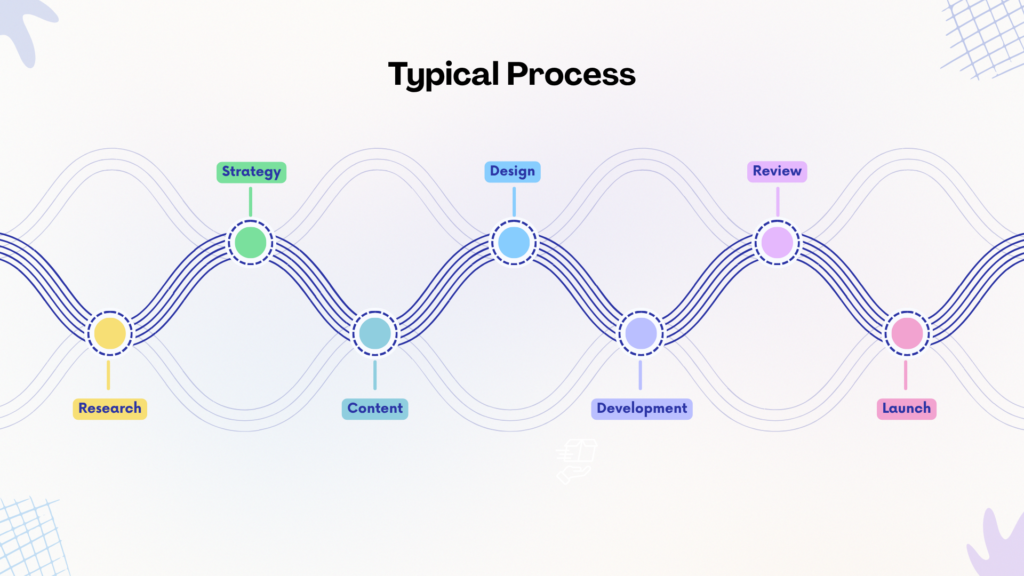
Each stage often belongs to a different person or department. Information gets passed from one group to another. Context gets lost. Meetings happen. Documents get created. Someone revises something based on feedback from someone who wasn’t involved three steps earlier.
AI can certainly make each of those boxes faster. But what if the boxes themselves need to change?
What happens when customer interviews can be synthesized as they occur?
When those findings can immediately inform hypotheses?
When a hypothesis can become a prototype in hours rather than weeks?
When multiple variations can be tested before an organization commits significant resources to one direction?
When customer feedback can continuously feed the next iteration?
Now we’re not simply speeding up the old process. We’re redesigning the factory floor. And I suspect that is where some of AI’s biggest productivity gains will ultimately come from.
What if the opportunity isn’t just better jobs, but more choice about the work we do?
There is another possibility here that I find much more interesting than the standard debate about whether AI will eliminate jobs.
Industrial technologies created enormous opportunities for people without specialized training. You didn’t necessarily need to be a master craftsman to work on an assembly line. The knowledge was increasingly embedded in the machinery, the process and the organization around you. The factory made it possible for relatively unskilled labor to participate in highly productive economic activity.
Information technology may create an almost opposite version of that phenomenon.
Instead of giving people machines that allow them to perform a narrow task repeatedly, we’re beginning to give them access to something closer to an expert, tutor, researcher, strategist and coach sitting in their pocket.
Someone who doesn’t understand accounting can ask an AI system to explain a balance sheet in language they understand.
Someone trying to start a business can have it walk them through pricing, positioning, contracts, marketing and operations.
A young designer can interrogate a problem, ask why a particular methodology might be appropriate, generate alternatives and have concepts explained at whatever level of sophistication they’re ready for.
And unlike a traditional search engine, the interaction doesn’t have to end with a list of links. You can keep asking questions. You can challenge the answer. You can ask for an analogy. You can provide your circumstances and ask how the answer changes. You can learn while you’re doing the work.
That doesn’t suddenly make everyone an expert. Experience, judgment and actual competence still matter enormously. But it does begin to reduce the cost of accessing expertise. And I wonder whether that changes the labor market in ways we’re not fully accounting for.
More Ways to Work
One of the ideas I’ve been wrestling with while reading The Sovereign Individual is what happens when increasingly powerful information technologies give individuals capabilities that previously required an organization around them.
Historically, if you wanted access to sophisticated tools, distribution, expertise, capital or administrative infrastructure, joining a larger organization often made sense. The institution provided leverage that was difficult to recreate on your own.
AI begins to unbundle some of that.
One person can already do things that would have required a small team not very long ago. As autonomous agents improve, that person may be able to coordinate research, marketing, customer service, analysis, scheduling and other functions without hiring a person for every responsibility.
So perhaps the future of work isn’t simply larger companies employing fewer people. It could also include many more very small companies. Independent practices. Partnerships. Specialized studios. One-person businesses supported by technology.
In other words, AI might not only change what happens inside a company. It might change how many people decide they need a traditional employer at all. And if that happens, there’s an important human consequence that goes beyond productivity. People may have more latitude to choose what they want their work to be for.
What if we could spend more of our careers working on things that actually matter to us?
For most of human history, work has primarily been an economic necessity. Even today, telling someone to “follow their passion” can sound absurd when they have a mortgage, health insurance, children or other very real obligations.
AI doesn’t make those realities disappear.
But if technology continues lowering the cost of starting something, learning something and accessing capabilities that once required an entire organization, it could widen the range of viable choices.
Maybe more people can afford to ask: What problems do I actually want to spend my limited time solving?
There’s an organization in the design community that I think represents an early version of this idea particularly well.
Hard Problems is a nonprofit focused on helping designers move into full-time work on problems such as climate change, healthcare, public health and good government. Their stated ambition isn’t simply to create another design job board. It’s to build bridges between experienced designers and the scientists, doctors, environmentalists, public servants and other people already working on difficult societal problems.
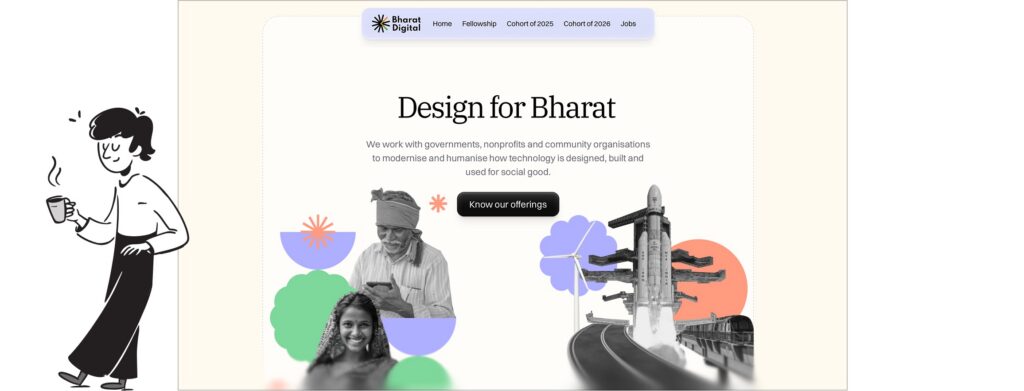
They’ve also built a unified experience specifically around this premise, curating roles in design, product, research and communications at organizations working on areas such as healthcare, education, climate and public services.
What I like about that isn’t simply the specific causes they’ve selected. It’s the underlying proposition:
Your professional skills and the problems you care about don’t necessarily have to live in separate parts of your life.
For a long time, the prestige ladder in technology and design has pulled talented people toward a relatively narrow collection of companies and problems. Hard Problems is explicitly trying to change that culture by making other career paths more visible and more viable. Now imagine pairing that movement with tools that dramatically increase an individual’s leverage.
A talented designer doesn’t necessarily have to choose between joining an enormous technology company or struggling alone to do meaningful work with limited resources.
A five-person organization working on public health may increasingly have access to capabilities that once belonged only to a 500-person organization.
A person who sees a problem in their own community may be better equipped to build something around it.
Someone who’s spent years doing work that pays the bills but leaves them cold may eventually have more realistic pathways to apply what they know somewhere else.
That’s a version of the AI future I find considerably more interesting than simply asking how many more units of output we can extract from the same workforce.
Agency is the goal
We talk constantly about AI increasing productivity. I think we should also talk about whether it can increase agency.
- Agency over how we learn.
- Agency over what we build.
- Agency over who we work for.
- And perhaps, increasingly, agency over why we work at all.
If AI can lower some of the barriers between an individual and the knowledge, capabilities and infrastructure required to create economic value, then the end state doesn’t have to be a handful of enormous companies with extraordinarily powerful machines.
It could also be millions of smaller, highly capable organizations and individuals using those same technologies to pursue much more specific problems.
Don’t outsource your thinking
All of this can make people understandably anxious.
I don’t find “AI won’t replace you, but someone using AI will” particularly helpful. It makes for a catchy LinkedIn post, but it doesn’t tell someone what to do Monday morning.
My advice is simpler.
Get very good at using AI inside a field you understand. Let it do more of the work that doesn’t require your highest level of judgment. Then move yourself closer to the things that do:
- Understanding people.
- Asking better questions.
- Defining problems.
- Recognizing patterns.
- Making decisions with incomplete information.
- Building trust.
- Facilitating difficult conversations.
- Applying taste and judgment.
- Knowing when an answer that sounds convincing is actually wrong.
Don’t outsource your thinking. Outsource the things that give you more time to think.
And maybe productivity isn’t the only goal
I’ll leave you with this.
A 1995 analysis of long-term working patterns found that total lifetime hours worked by the average British worker fell from about 124,000 hours in 1856 to 69,000 hours in 1981, even as people lived longer. The researchers estimated that the share of disposable lifetime hours spent working fell from roughly 50% to 20%.
Technology, productivity gains, labor movements, public policy and changing social norms all played roles in that transformation. Which raises a question that may be more important than how many additional blog posts, presentations, designs or lines of code AI allows us to produce.
What do we want to do with the time it gives back to us?
We could use AI to squeeze another 20% or 30% of output from every employee. And I’m sure plenty of organizations will. Or perhaps some of those productivity gains could give us more room for the work machines aren’t particularly good at.
I don’t know whether Mollick’s fourth scenario ever arrives. I don’t know whether Hinton is right that humanity might someday turn out to be a transitional step toward another kind of intelligence.
Those are questions much bigger than anything I can answer. But for the moment, humans are still the ones deciding what these tools are for. And I’d like to think one of the opportunities in front of us isn’t simply using AI to make humans work more.